

Eye Exams

Dry Eye Evaluation

Burning, gritty, tired, or watery eyes have more than one cause. A focused evaluation helps your doctor find out which one is yours, then build a plan around it.

Doctor reviewing dry eye findings with a patient
Understand the cause before choosing a treatment.Evaluations available at our Rancho Cucamonga and Chino offices.

How We Evaluate

What Happens During the Visit

These are methods commonly used to evaluate dry eye. Your doctor decides which are appropriate; not all tests are performed for every patient.

History & Symptom Questionnaires

We start with your story: when symptoms began, what makes them better or worse, screen habits, contact lens wear, medications, and general health. You may be asked to complete a short standardized questionnaire, such as the OSDI (Ocular Surface Disease Index) or DEQ-5 (Dry Eye Questionnaire). These help measure how symptoms affect daily life and track change over time. A questionnaire score is a guide, not a diagnosis on its own.
Eyelids, Blinking & Meibomian Glands

The doctor looks at the eyelid margins, lashes, and gland openings for signs of blockage, inflammation, crusting, or debris. Blink completeness and rate are observed, because partial blinking can leave the tear film unspread. Gentle pressure on the lids may be used to see the quality and flow of the oils your meibomian glands produce.

Slit Lamp & Surface Staining

Using a slit lamp microscope, the doctor examines the cornea and conjunctiva. Diagnostic dyes such as fluorescein or lissamine green may be placed on the eye to highlight dry spots or areas of surface stress that are otherwise invisible.

Tear-Film Stability

Tear breakup time measures how long your tear film stays smooth after a blink before it starts to break apart. A short breakup time can point toward an unstable tear film, often linked to evaporative dry eye.

Tear Volume When Indicated

If reduced tear production is suspected, a Schirmer test may be performed. A small strip of paper rests at the edge of the lower lid for a few minutes to estimate how much tear fluid the eye produces.

Additional Testing in Some Cases

Depending on your findings, the doctor may consider additional tools such as meibography (imaging of the glands), tear osmolarity, or tear inflammation markers. Availability of these tests varies, and they are not part of every visit. Not every patient needs every test; the doctor selects what is useful for your situation.

Three Patterns of Dry Eye

Evaporative

The tears are produced, but they evaporate too quickly, most often because the meibomian glands are blocked or releasing poor-quality oil. This is the most common pattern.

Aqueous-Deficient

The eyes do not produce enough of the watery layer of the tear film. This can be related to age, certain medications, or systemic conditions such as Sjögren's syndrome.

Mixed

Many people have features of both. Identifying the balance helps the doctor decide which treatments to start with and which to add later if needed.

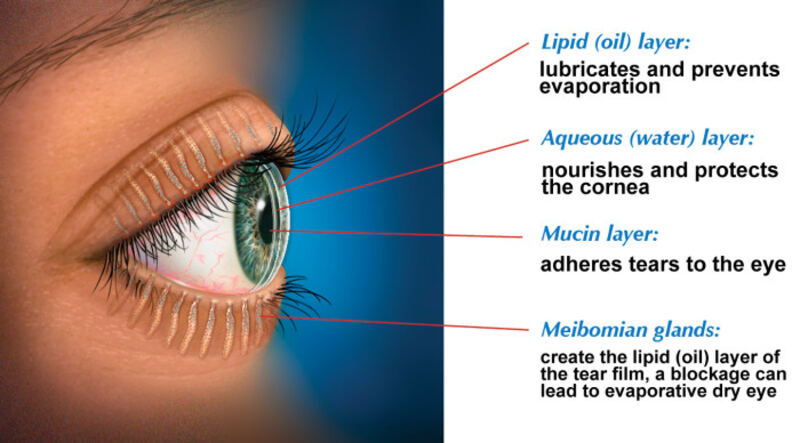
Tear film layers and meibomian glands, described below
The oil layer slows evaporation, the water layer nourishes the cornea, and the mucin layer helps tears cling to the eye. Trouble in any layer can cause symptoms.

Individualized Home Care

Everyday Foundations

Most plans begin with daily habits tailored to your findings. Supplements may be discussed for some patients, but they are not a universal treatment.

For clinician-guided eyelid cleansing, see OcuSoft lid hygiene products.

Artificial Tears

Lubricating drops can supplement the tear film. If you use drops frequently, preservative-free formulas are often preferred. Your doctor can suggest a type that fits your pattern.

Warm Compresses & Lid Care

Moist heat can soften thickened gland oils, and doctor-directed eyelid cleansing helps reduce debris along the lash line. Consistency matters more than intensity.

Environment & Blinking

Reducing direct airflow from fans or vents, adding humidity, taking regular screen breaks, and practicing complete blinks can ease daily symptoms.

Contact Lens Adjustments

Lens material, wearing time, replacement schedule, or cleaning solution may be changed if contact lenses contribute to discomfort.

Doctor-Assessed Options

When More Is Needed

If home care is not enough, your doctor may discuss additional options. Not every treatment is right or available for every patient, and no treatment can promise a specific outcome.

Prescription Anti-Inflammatory Drops

When inflammation plays a role, the doctor may assess whether a prescription anti-inflammatory or tear-supporting medication is appropriate. Choice and duration depend on your exam and health history.

Gland Expression & Thermal Treatment

For meibomian gland dysfunction, in-office gland expression and controlled heat treatments can help clear blocked glands. Your doctor will discuss whether these fit your findings.

OptiLight IPL

The practice lists Lumenis OptiLight intense pulsed light for dry eye related to meibomian gland dysfunction in appropriate patients. Suitability depends on skin type, eye findings, and a doctor's assessment.

Learn about Lumenis IPL

Punctal Plugs

In selected cases, tiny plugs may be placed in the tear drainage openings to help keep natural or supplemented tears on the eye longer.

Specialist Referral

For more complex ocular-surface disease, options such as therapeutic scleral lenses or autologous serum tears may be considered. When appropriate, we coordinate referral to a specialist who provides these.

OptiLIFT, a Separate Assessment

OptiLIFT is a distinct treatment for eyelid muscle tone and blinking. It is evaluated separately for selected patients and is not a universal cure for dry eye.

Learn about OptiLIFT

Explore our full dry eye treatment center.

Preparing for Your Visit

What to Bring

  • A list of current medications, supplements, and eye drops, including how often you use them
  • Your contact lenses, lens case, and the solution brand you use, if you wear lenses
  • Your current glasses
  • Notes about when symptoms are worst: morning, evening, screens, driving, wind
  • Insurance information and a photo ID

What to Expect

  • Plan for a longer visit than a routine eye exam so testing is not rushed
  • If possible, avoid eye drops for a few hours beforehand unless the doctor has told you otherwise, since drops can affect tear testing
  • Skip eye makeup on the day of your visit so the lids and lash line can be examined clearly
  • Diagnostic dyes are temporary and may tint tears briefly
  • You will leave with an individualized plan and a follow-up timeline to check progress

Common Questions

Frequently Asked Questions

How is a dry eye evaluation different from a regular eye exam?

A comprehensive eye exam checks vision and overall eye health. A dry eye evaluation focuses on the tear film, eyelids, glands, and eye surface so the doctor can understand why your eyes feel uncomfortable and what type of dry eye is involved.

Will I have every test listed on this page?

Not necessarily. The doctor chooses tests based on your symptoms and findings, and some specialized tests are not available at every visit. The goal is useful information, not a fixed checklist.

Does the online dry eye quiz diagnose me?

No. The quiz and symptom questionnaires help you describe what you are feeling. Only an in-person examination can confirm whether you have dry eye and what is causing it.

Are supplements like omega-3s a treatment for everyone?

No. Some patients choose nutritional supplements, but research results are mixed and they are not a universal treatment. Ask your doctor whether they make sense for you.

How soon will my symptoms improve?

It varies. Some people notice changes within weeks of consistent home care, while others need a combination of treatments adjusted over several visits. No treatment guarantees a specific result, which is why follow-up matters.

Is dry eye evaluation covered by insurance?

Coverage depends on your plan and the reason for the visit. Contact our office before your appointment and we can help you understand what to expect.

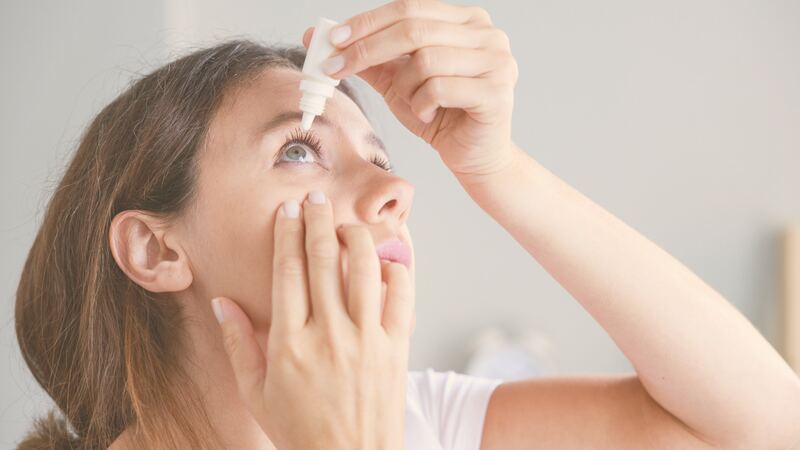
Woman applying lubricating eye drops

Start With Answers

Request a dry eye evaluation and our team will contact you to schedule at the office most convenient for you.