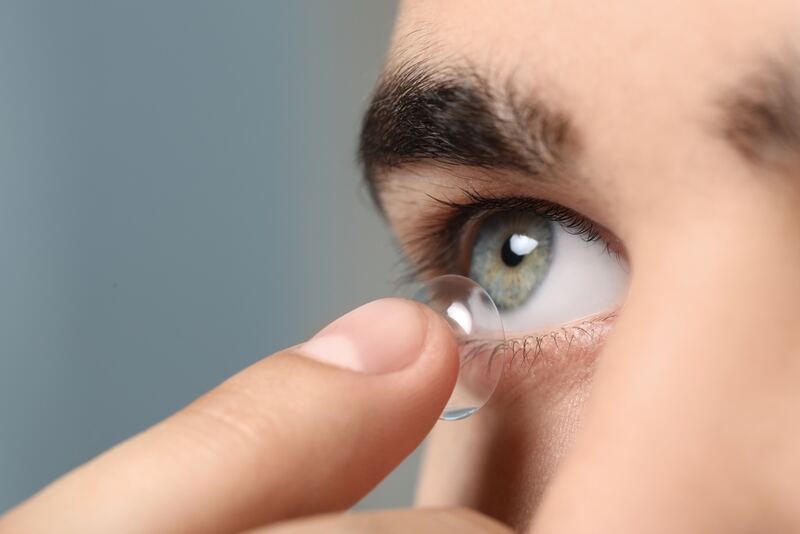
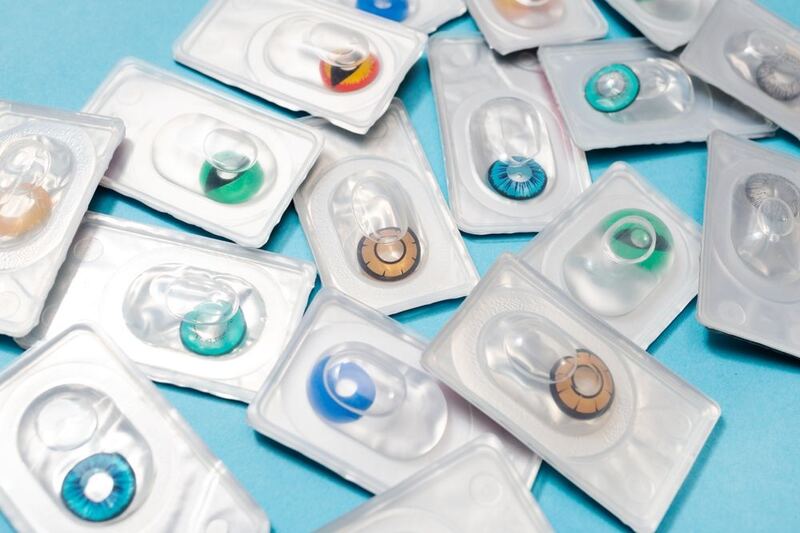
Do your contacts feel great all day, or are you counting the hours until they come out? For many patients, standard contact lenses give clear, comfortable vision with no fuss. But if you have an irregular cornea, dry eye, or a more complex prescription, standard lenses may not be enough. That's where specialty contact lenses come in. They give you customized vision correction when traditional lenses fall short.
What Are Standard Contact Lenses?
Standard contact lenses are the ones we prescribe most often. They're usually soft lenses that correct basic refractive errors like nearsightedness, farsightedness, and astigmatism.
Common Types of Standard Contact Lenses
You'll find soft lenses you replace daily, bi-weekly, or monthly. There are also toric lenses, which are made for mild to moderate astigmatism.
These lenses work well if your eyes are healthy and your prescription is straightforward. Most people adapt to them easily, and they're affordable and widely available.
What Are Specialty Contact Lenses?
Specialty contact lenses are custom-designed for complex vision issues or irregular eye conditions that standard lenses can't correct well. They take advanced measurements, a specialized fitting, and close follow-up care.
Common Types of Specialty Contact Lenses
Scleral lenses are large-diameter lenses that vault over the cornea and rest on the sclera, a great fit for irregular corneas and dry eye. Rigid Gas Permeable (RGP) lenses are firm lenses that give sharper vision for certain prescriptions. Hybrid lenses combine a rigid center with a soft outer skirt for comfort and clarity. And custom soft lenses are made for unusual prescriptions or eye shapes.
We often recommend specialty lenses for patients with keratoconus, post-surgical corneas, severe dry eye, high astigmatism, or vision distortions that standard lenses just can't correct.
Key Differences Between Standard and Specialty Contact Lenses
The biggest difference is customization. Standard lenses come in fixed sizes and powers, while specialty lenses are custom-designed to match the shape and needs of your eyes.
They also correct different things. Standard lenses handle common refractive errors. Specialty lenses take on the complex or irregular vision issues that standard lenses can't fully address.
Comfort and eye health matter too. If you have dry eye, corneal irregularities, or sensitivity, a specialty lens can feel better and protect your eye by creating a more stable lens environment.
Then there's the fitting. A standard lens fitting is usually simple. Specialty lenses in Rancho Cucamonga involve advanced diagnostics, detailed measurements, and follow-up visits so we can get your vision and comfort where they should be.
Find the Right Contact Lenses for Your Eyes
The right lens depends on your vision needs, your eye health, your lifestyle, and comfort goals. Standard contacts are an excellent solution for many patients. For people who've struggled with clarity or discomfort in traditional lenses, specialty contacts can be life-changing.
If your current contacts are uncomfortable, schedule a contact lens exam at Inland Family Optometry and we'll help you figure out whether standard or specialty contact lenses are the right fit for your eyes and your lifestyle. Visit our office in Rancho Cucamonga, California, or call (909) 987-4919 to book an appointment today.
Ready to schedule your visit?